Zdalna współpraca i edukacja w czasie pandemii Covid-19 w roku szkolnym 2020/2021
 |
||
 |
 |
 |
Od początku 2020 roku w Europie stopniowo rozprzestrzeniał się groźny koronawirus. Przyniósł niebezpieczną chorobę Covid-19: miliony zakażeń i tysiące ludzi straciło życie. Uczniom i studentom zabroniono chodzenia do szkół i na uczelnie. Rozpoczął się nowy sposób nauki i pracy zdalnie z naszych domów, który, z krótkimi przerwami, potrwał do czerwca 2021 roku.
Zdalne spotkania z partnerami
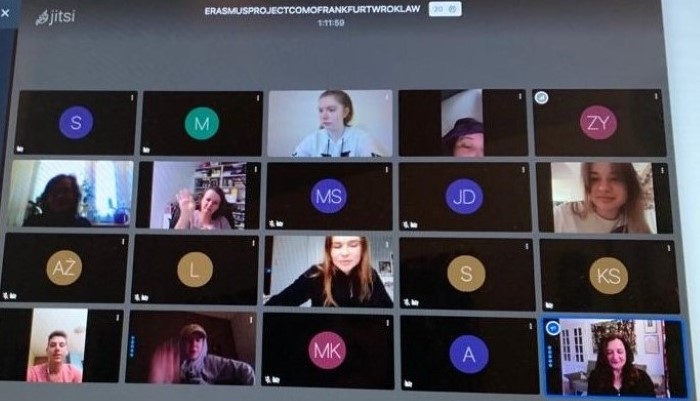
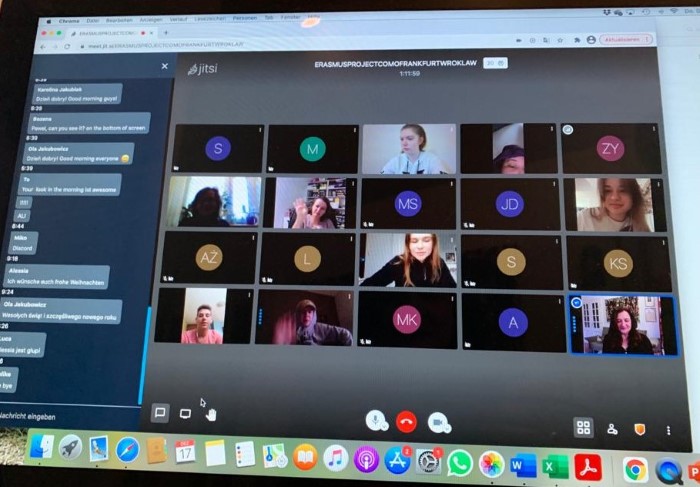
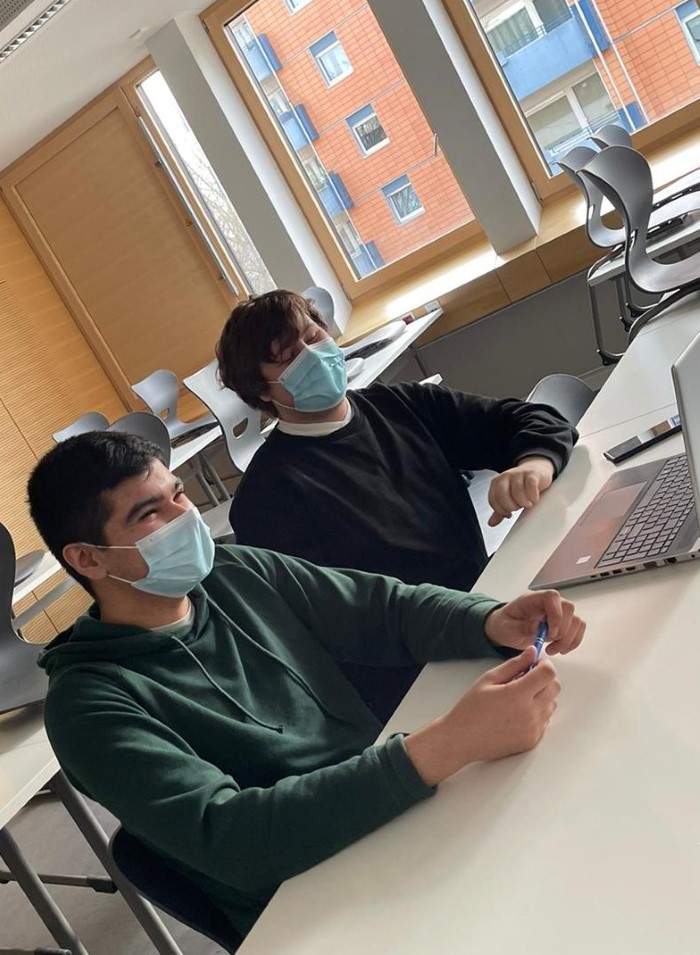
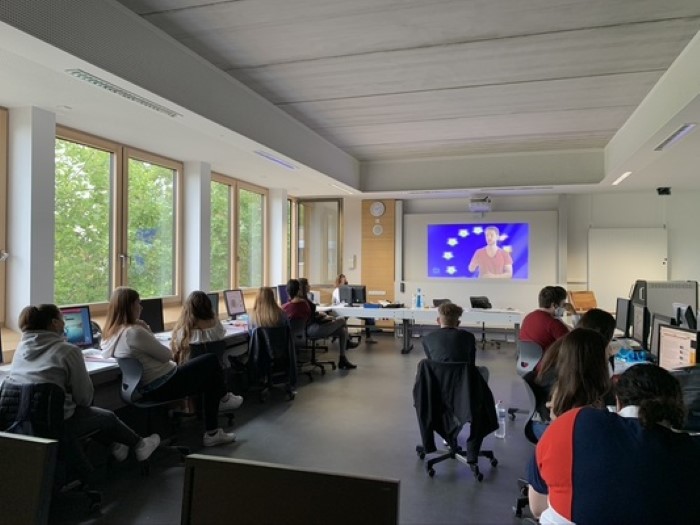
Zimą 2020/21 po kilkutygodniowym zawieszeniu zajęć szkolnych zapragnęliśmy znów współpracować z partnerami w naszym projekcie Erasmus Plus. Oto grupa niemieckich uczniów, którzy czekają na połączenie z uczniami polskimi i włoskimi:
Przeprowadziliśmy kilka wspólnych spotkań w czasie od stycznia do kwietnia 2021 r. Aby lepiej się poznać, mieliśmy kilka aktywności w mniejszych grupach. Na przykład, uczniowie w mieszanych, niemiecko-polskich zespołach, zagrali w grę „między nami”. W kolejnym zadaniu poszukiwali wspólnych zainteresowań oraz wymieniali się informacjami o narodowych tradycjach Świąt Wielkanocnych.
Zdalne spotkania na temat Unii Europejskiej w wrocławskim Punkcie Informacji o Parlamencie Europejskim
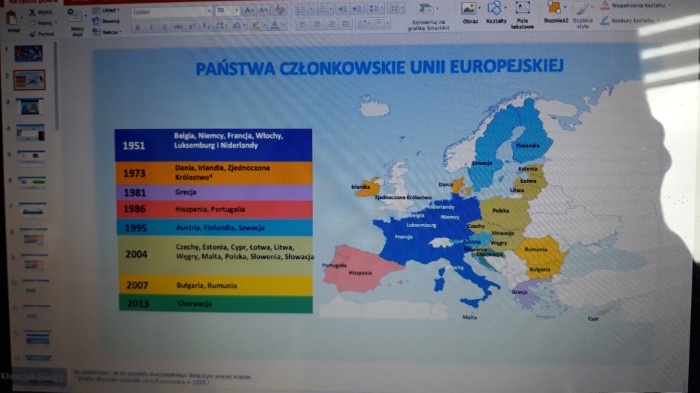
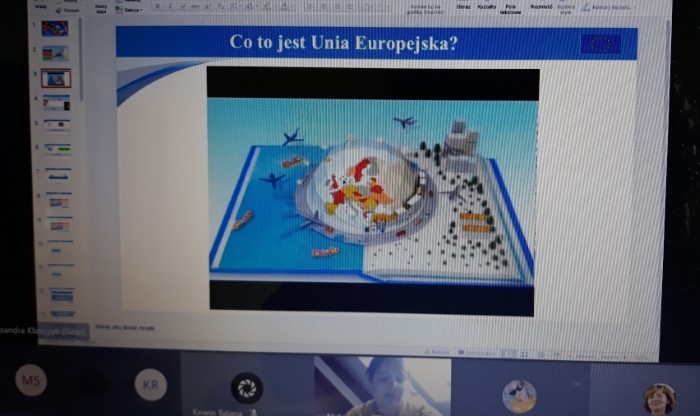
Rozpoczynając lekcję pt. „UE – czym jest i czym się zajmuje?”, Pani Aleksandra Klimczyk z Uniwersytetu Wrocławskiego, przedstawiła państwa członkowskie Unii Europejskiej oraz wytłumaczyła czym jest Unia Europejska. Uczniowie poznali także symbole europejskie – flagę, hymn i motto. Następnie przedstawiono osiągniecia Unii Europejskiej, które są bliskie obywatelom, takie jak: strefa Schengen, karta EKUZ, program Erasmus+, strefa euro. Kolejnym etapem spotkania było przedstawienie najważniejszych celów Komisji Europejskiej, np. Europejski Zielony Ład. Na koniec uczniowie rozwiązali quiz pt. „Jak UE wpływa na nasze codzienne życie”.
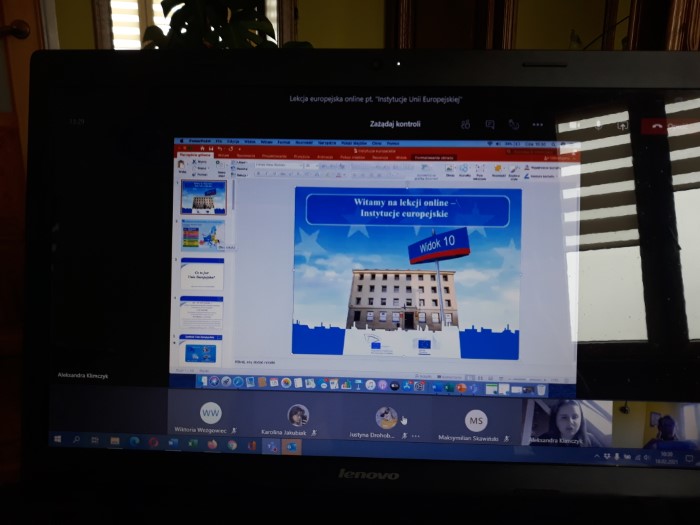
Na drugim spotkaniu Pani Aleksandra Klimczyk szczegółowo omówiła instytucje Unii Europejskiej i ich znaczenie dla Europejskich społeczności.
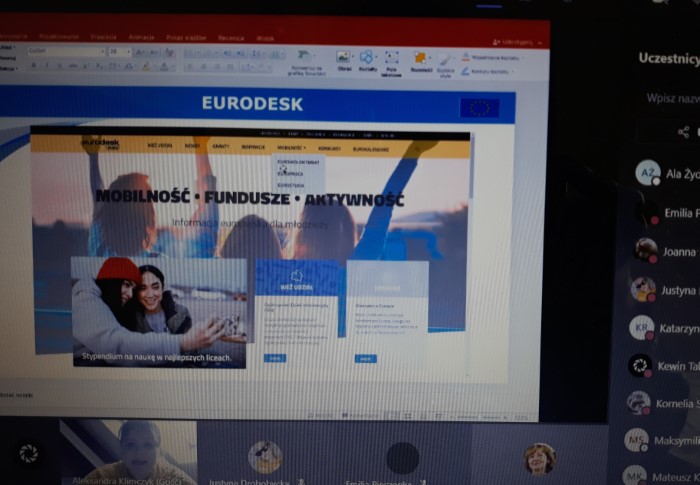
Podczas trzecich zajęć, zostały przedstawione informacje o Europejskim Portalu Mobilności Zawodowej (EURES), programie Erasmus+, EURODESK, Europejskim Portalu Młodzieżowym oraz Europejskim Korpusie Solidarności. Uczniowie dowiedzieli się także o możliwości zrobienia własnego CV, listu motywacyjnego w programie EUROPASS.
Cooperation in the pandemic time
Starting from the beginning of 2020 year a vicious coronavirus has been spreading gradually across Europe. It has brought dangerous Covid-19 disease: millions cases and thousands of people lost their lives. Pupils and students were stopped from going to school and a new way of working and learning online from home has begun and, with short breaks, has lasted till June 2021.
6.1 Online meetings of partners
In the new school year 2020/21 we want to keep working on the Erasmus+ project despite Corona. This is the group of German students who are looking forward to working (at least online) with students from Italy and Poland :-).
We had several online meetings together starting from January till April 2021. To get to know better we did some activities in teams. For example, the students in mixed groups played the game ‘Among us”, followed by the interaction to find common interests and exchange information about Easter traditions in our countries.
6.2 Online workshops about the European Union at the House of Europe in Wrocław
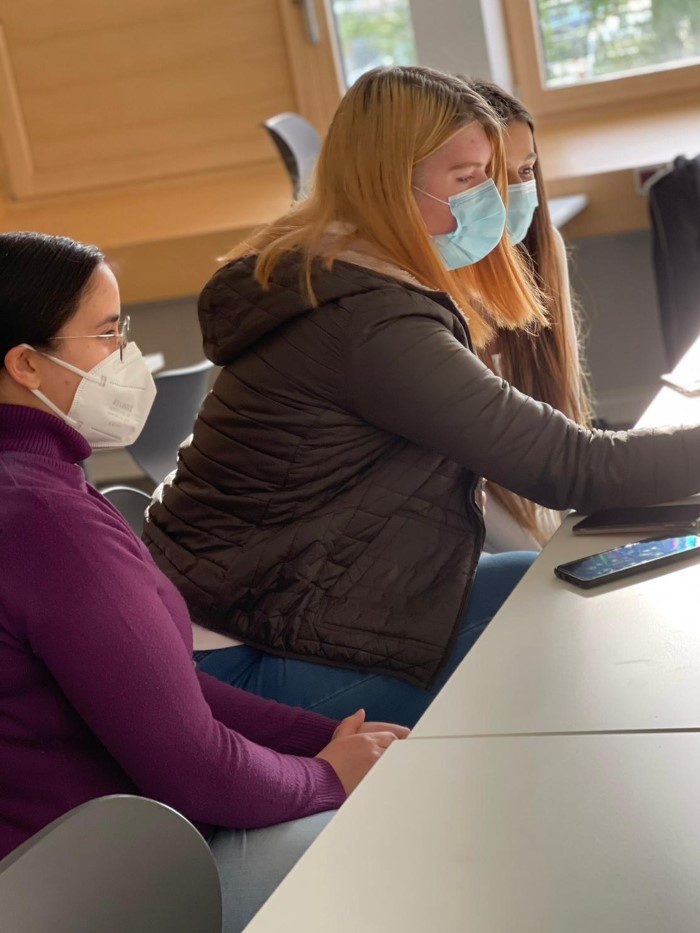
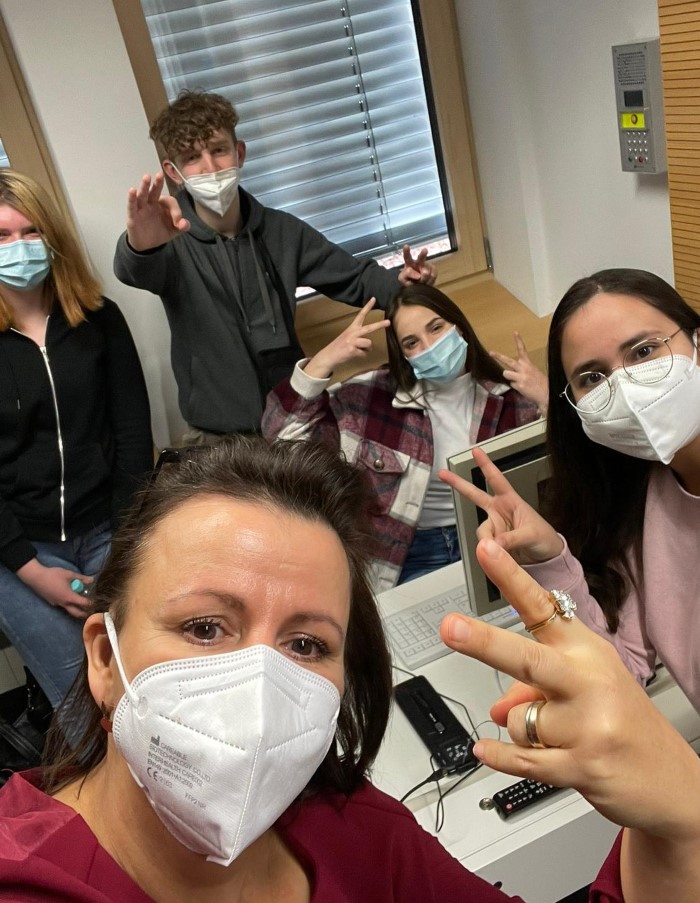
Polish students had several online meetings at Wrocław’s Information Point of The European Parliament. The workshops were conducted by Ms Aleksandra Klimczyk.
At the first meeting, the lecturer introduced the member states of the European Union and explained what the European Union is. We also learned about European symbols – the flag, anthem and motto.
We had several online meetings at Wrocław’s Information Point of The European Parliament.
Then the achievements of the European Union that are close to the citizens were presented: the Schengen area, the EHIC card, the Erasmus Plus programme and the euro area. The next stage of the meeting was to present the most important goals of the European Commission, such as the European Green Deal. At the end, the students took a quiz called "How the EU affects our daily lives”.
At the second meeting the lecturer discussed the European Union institutions and their role for the European societies.
As it concerns the meeting entitled "Job mobility in the EU": During the classes, the students were acquainted with the European Job Mobility Portal (EURES), Erasmus + program, EURODESK, the European Youth Portal and the European Solidarity Corps was presented. During the classes, the students also learned about the possibility of writing their own CV and a cover letter in the EUROPASS program.
Bożena Ferens